
Arapawa Goats
-
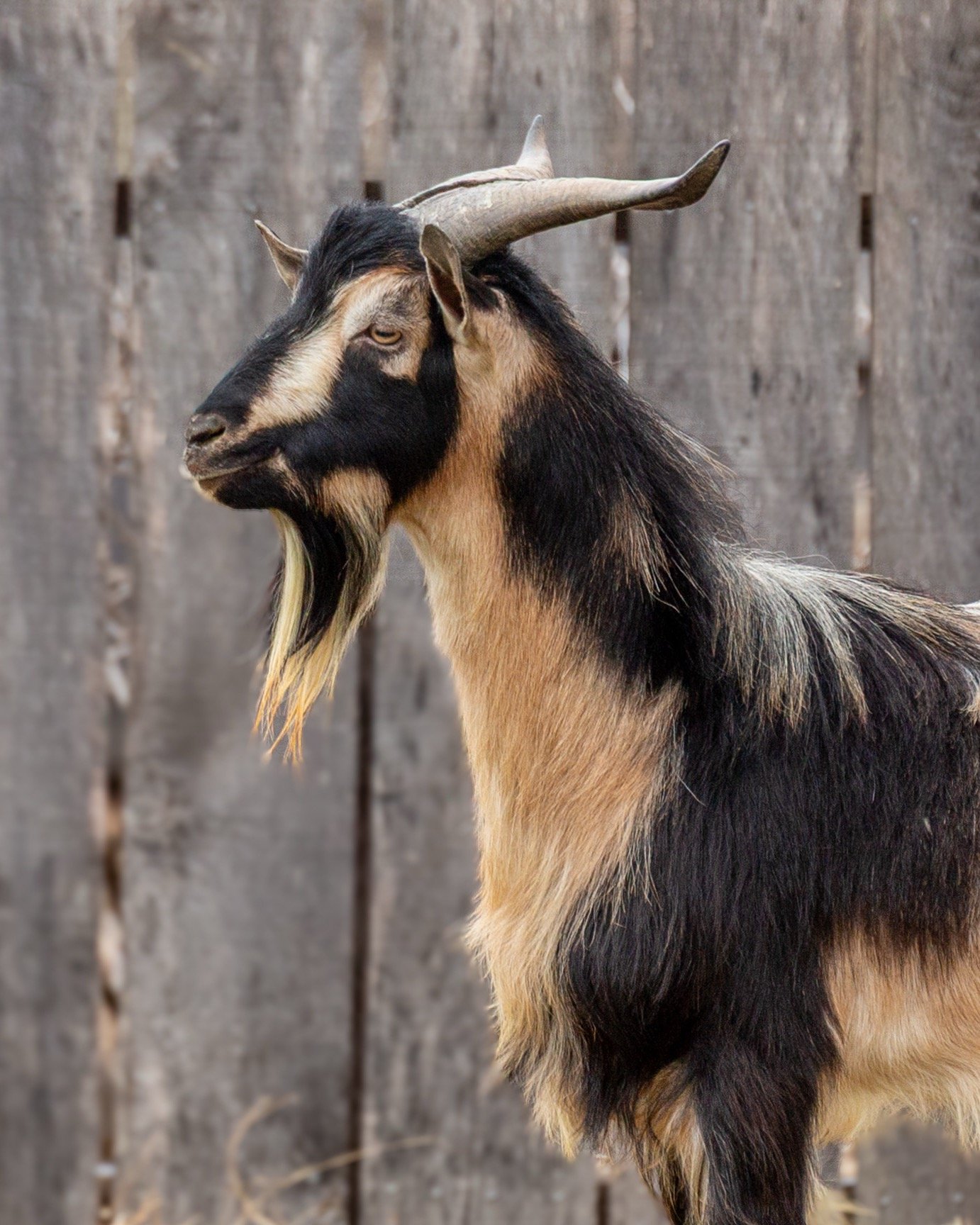
Arapawa goats are a critically rare heritage breed known for their hardiness, environmental resilience, and practical versatility. Their ability to thrive in challenging conditions makes them well suited to pasture-based meat production, with useful milk from select does.
At Wanderwood, we shifted our goat program toward Arapawas in 2026 because their natural adaptability suits our Northern Michigan pastures and woodlots. We are developing a breeding herd focused on producing premium, slow-grown heritage goat meat while retaining the hardiness and practical qualities that distinguish the breed.
-
Premium Goat Meat
Goat meat is one of the most underrated meats we produce, and demand is already strong. On many market days, we sell more ground goat than ground beef.
Arapawas are slow-growing heritage goats with considerable potential for premium meat production. We believe their natural growth cycle and traditional, pasture-based management offer the foundation for exceptional meat, raised for quality rather than speed.
Our goal is to build on that promise by documenting the breed's production characteristics, evaluating its commercial viability, and working with experienced cooks to refine our understanding of its culinary qualities. We will share our findings with the broader Arapawa conservation community, contributing practical knowledge to help establish a sustainable commercial future for this remarkable breed.
Our initial processing target is 12–15 months, although that window will evolve as we evaluate carcass development, eating quality, and production costs.
Rather than reducing the carcass to a few familiar products, we favor a full range of traditional heritage cuts. The result should be especially rewarding for professional and aspiring cooks who enjoy learning an animal through its different cuts and cooking methods.
A Note on Preparation
We favor traditional, bone-in cuts that preserve more of the animal: whole legs and shoulders, full racks, whole necks, and shanks. Tender cuts such as the rack and loin chops are well suited to dry-heat cooking, while the neck, shoulder, and shanks reward slower roasting or braising.
Goat rewards cooks who are willing to work with the whole animal and match the cooking method to the cut.
Milk & Soap
Select Arapawa does will also be milked for farmstead use and goat-milk soap.
We are not developing a conventional dairy herd. Instead, milk will remain a secondary product of the breeding herd, allowing productive does to contribute beyond raising kids while supplying the modest amount of dairy our farmstead uses.
-
Heritage & Stewardship
Arapawa goats take their name from Arapawa Island in New Zealand's Marlborough Sounds, where they were first recorded in 1839. Generations of isolation shaped a population that genetic testing has since shown to be distinct from other goat breeds.
That population nearly disappeared. In 1987, Betty and Walt Rowe established a sanctuary with just 40 goats rescued from eradication. The entire U.S. population later grew from only six imported founders. Arapawas remain critically rare, making their preservation an important priority.
We established our foundation herd in partnership with Conner Prairie in Indiana, whose longstanding conservation breeding program has helped introduce Arapawas to farms across the country. Their commitment to preserving genetic diversity and expanding the breeding population has been instrumental in securing the breed's future.
Land Management
Arapawas are effective browsers, particularly useful for managing brush, weeds, and woody vegetation. That makes them well suited to our woodland pastures, brushy edges, and mixed grazing areas.
Within our rotational system, they complement sheep and cattle by browsing vegetation those animals typically leave behind, helping keep the landscape open and productive.
Northern Michigan Hardiness
Cold, damp winters make Northern Michigan a challenging environment for goats, particularly breeds adapted to warmer or drier climates.
Arapawas developed remarkable hardiness through generations of survival in New Zealand's cool, exposed island environment. Their resilience and adaptability make them especially well suited to our climate and pasture-based management.
They are still goats. Even hardy animals need dry shelter and protection from the harshest winter weather.
The Slower Growth Curve
Arapawas are naturally slow-growing, with their breed standard recognizing full maturity at two years of age. This measured development fits our approach to raising livestock: allowing animals time to grow and develop naturally rather than pushing for maximum rates of gain.
-
As we transition away from our original dairy herd, we have registered Nigerian Dwarf breeding animals available for sale. Registration is through the American Dairy Goat Association (ADGA).
Registered Kiko breeding animals may also become available as we phase out the Kiko herd. Registration is through the National Kiko Registry (NKR).
Our priority with the Arapawas is herd expansion, so breeding-stock availability remains limited. Registration is through the Arapawa Goat Breeders Association (AGBA).
AVAILABLE GOATS
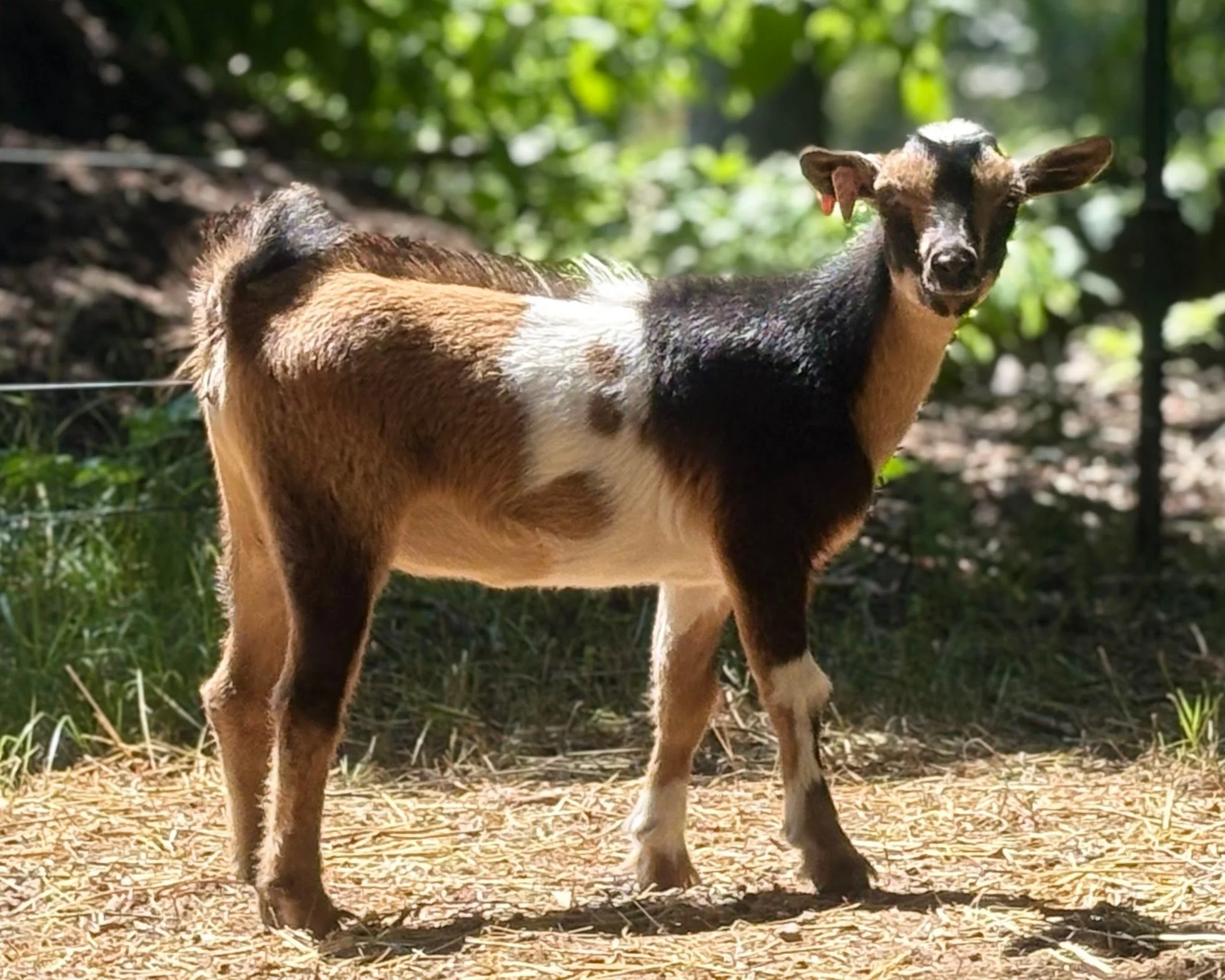
Willow
Nigerian Dwarf Doeling • Born May 2026
ADGA-registered and polled, Willow comes from strong milking lines and is sired by a Superior Genetics buck. Adventurous and people-friendly, she is a promising future breeding doe or family milker. She will be ready to breed in 2027.
$500
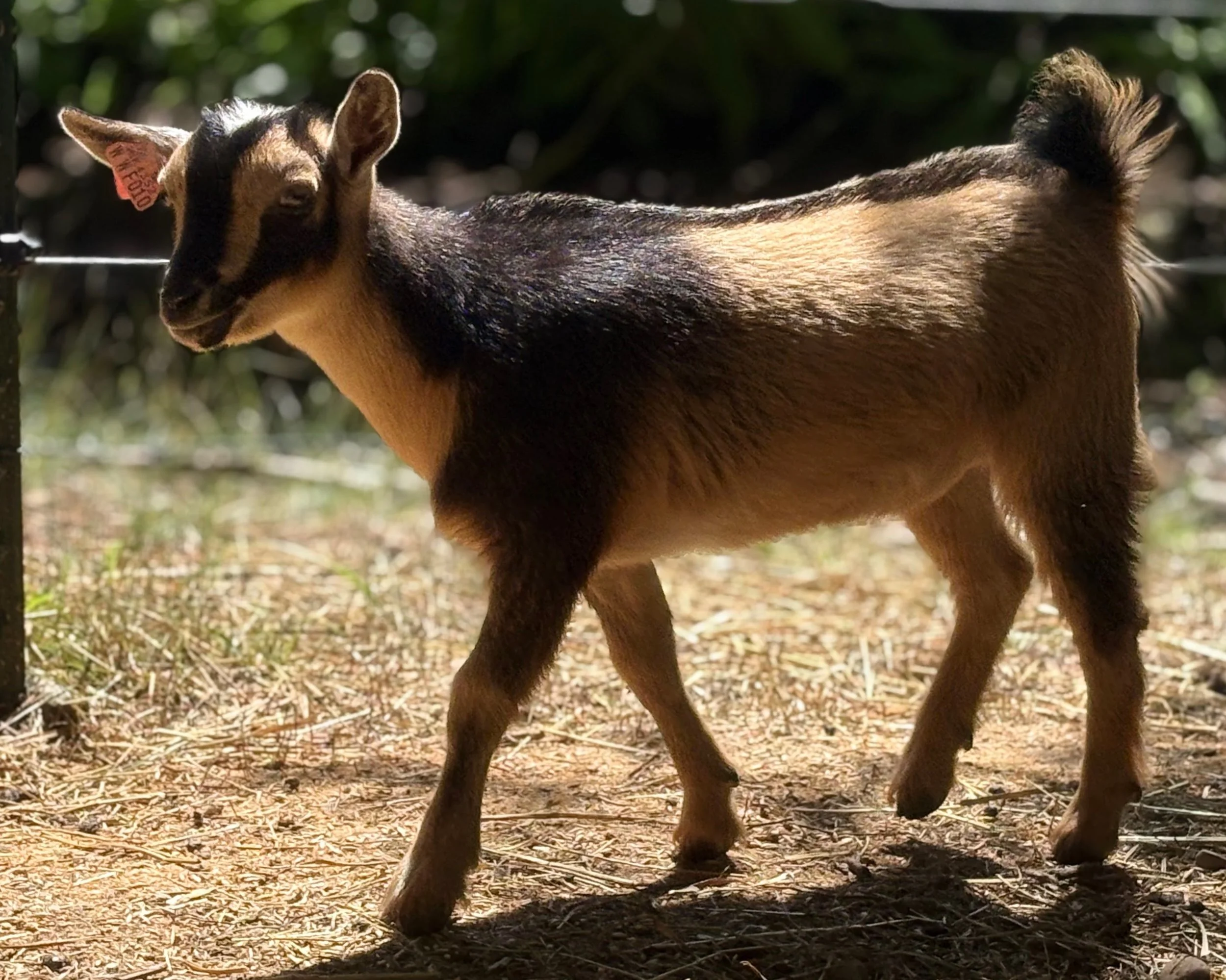
Pixie
Nigerian Dwarf Doeling • Born May 2026
ADGA-registered and polled, Pixie comes from strong milking lines and is sired by a Superior Genetics buck. Bold, curious, and confident, she offers strong dairy potential in a very compact package. She will be ready to breed in 2027.
$500
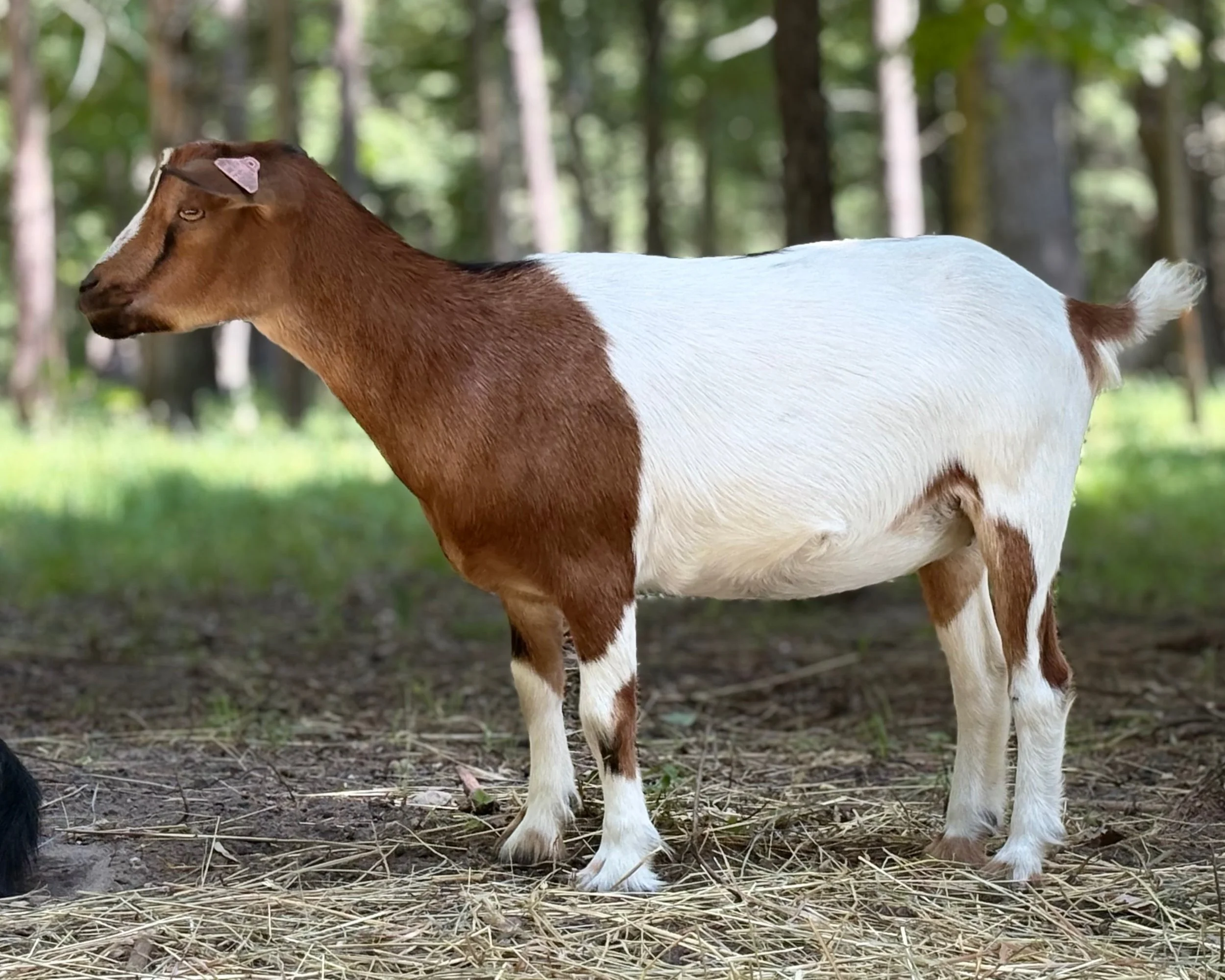
Chloé
Nigerian Dwarf Doeling • Born May 2025
ADGA-registered and polled, Chloé is a well-grown young doe from one of our strongest milkers and a Superior Genetics sire. She offers excellent dairy lineage and promising potential as both a breeding doe and family milker. She has been exposed to our Superior Genetics buck and is expected to kid in April 2027.
$700 • suspected bred
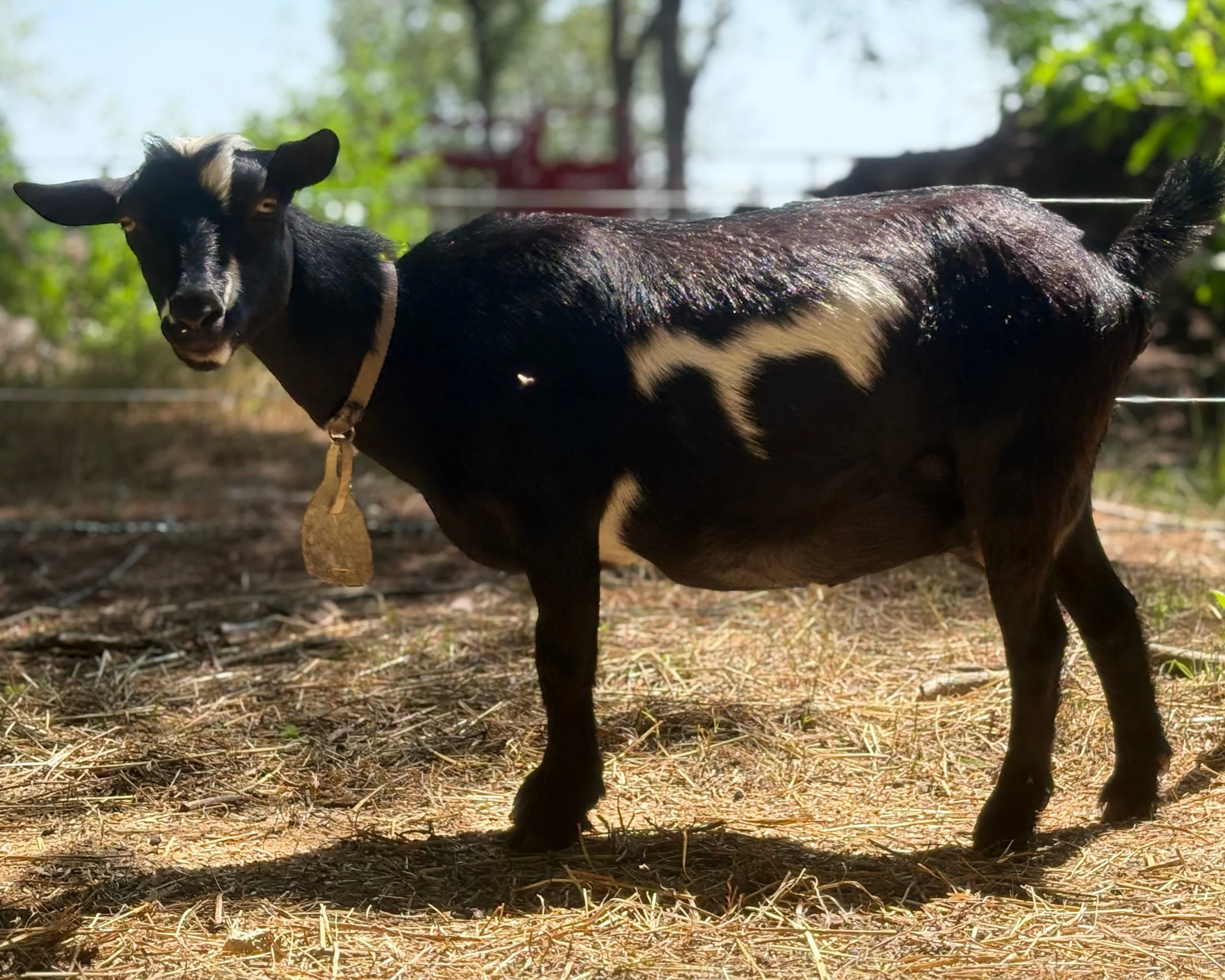
Lily
Nigerian Dwarf Doe • Born April 2024
ADGA-registered and disbudded, Lily is a proven young doe whose first kidding produced quads in spring 2026. An exceptional mother, she successfully adopted two abandoned kids in 2026. She has been exposed to our Superior Genetics buck and is expected to kid in April 2027.
$900 • suspected bred
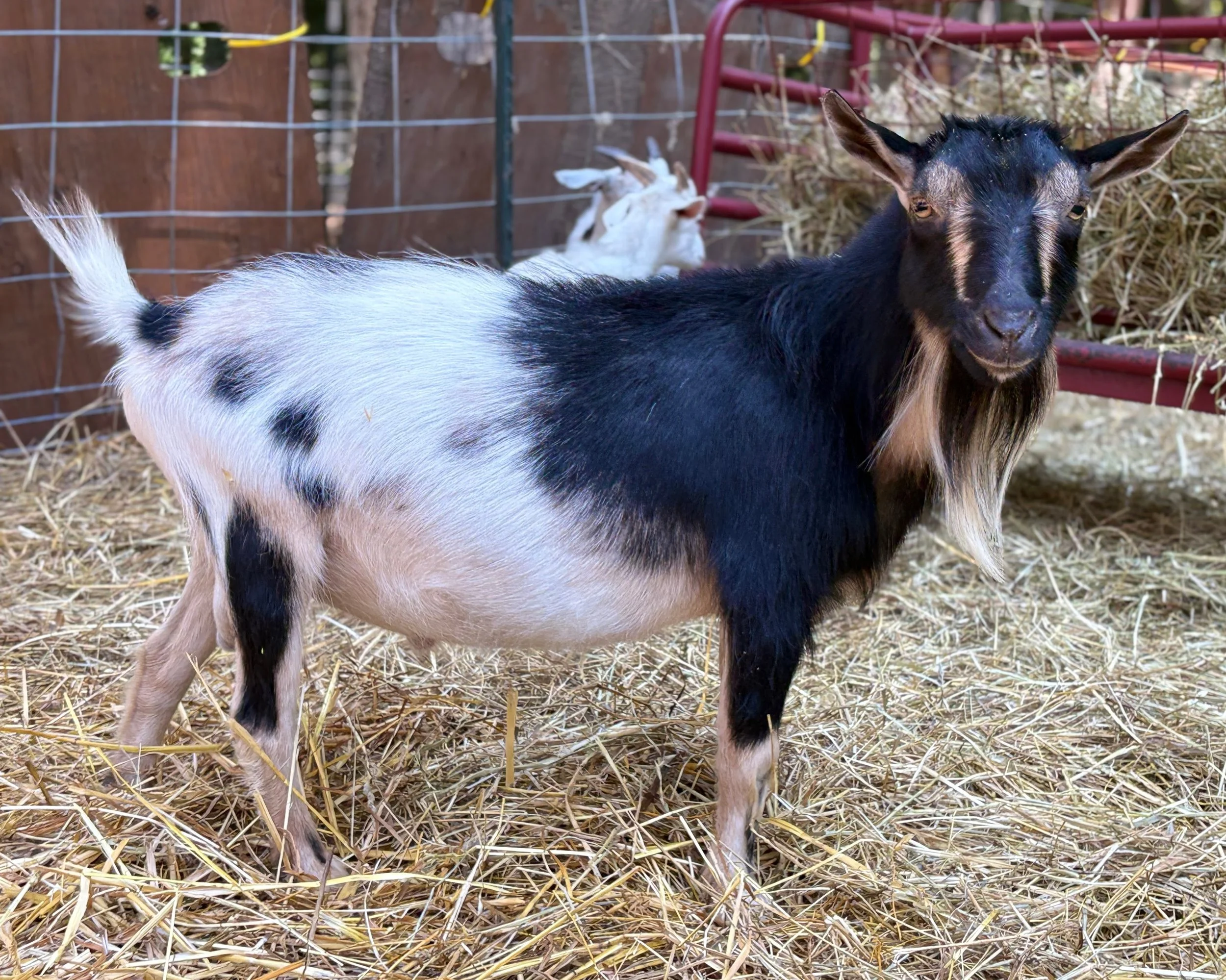
Redwood
Nigerian Dwarf Buck • Born March 2023
Redwood is an ADGA-registered, polled buck with the Superior Genetics designation. Exceptionally reliable and efficient, he has consistently settled every doe and doeling on the first cycle. Friendly and easy to handle, he actively seeks attention and is always pleased to accept head scratches.