
Our Practices
About
Silvopasture farming
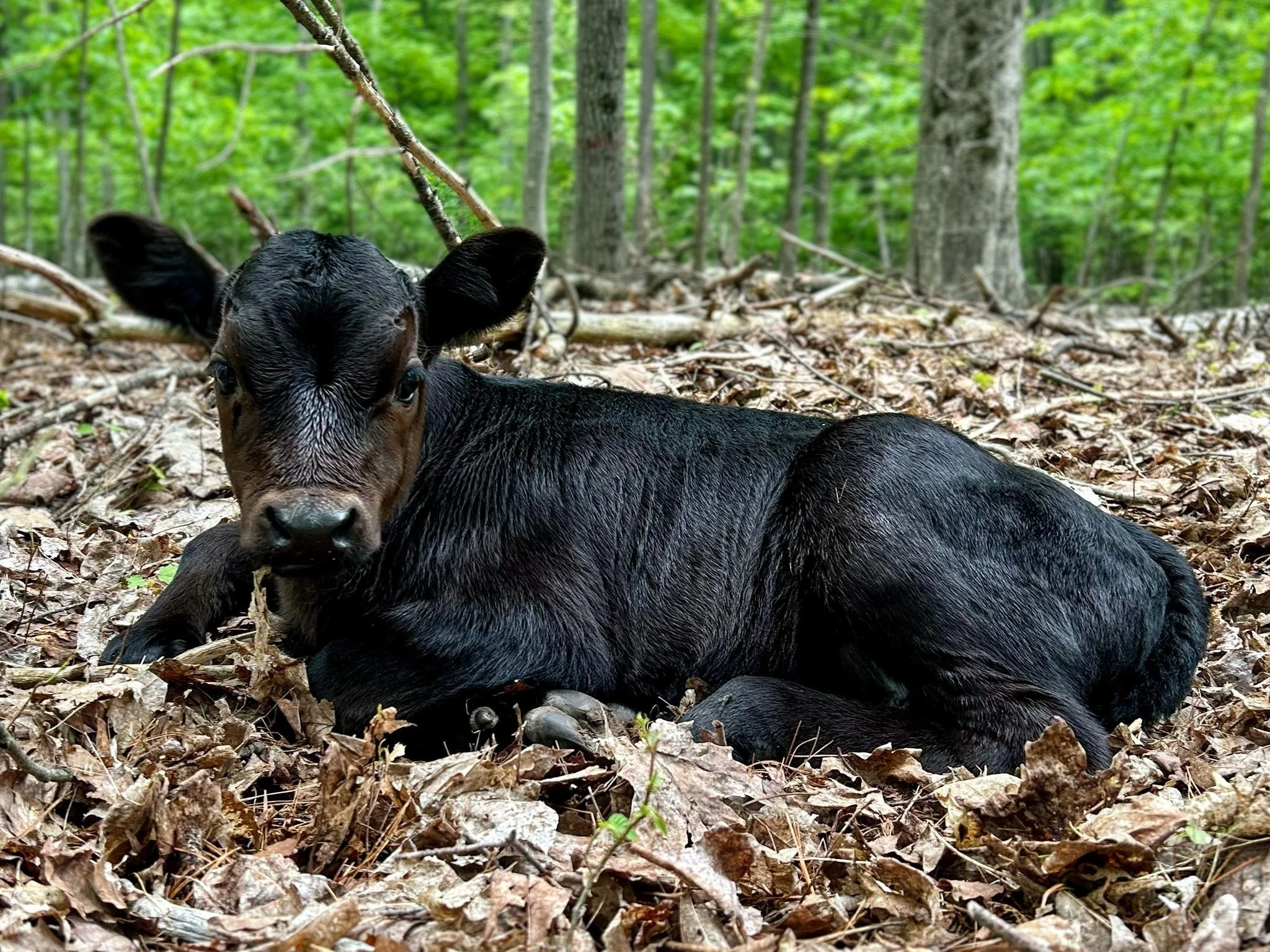
At Wanderwood Farmstead, we practice silvopasture: the intentional integration of livestock, pasture, and woodland within one managed system. Rather than clearing Northern Michigan’s woods to create more open pasture, we build the farm around them.
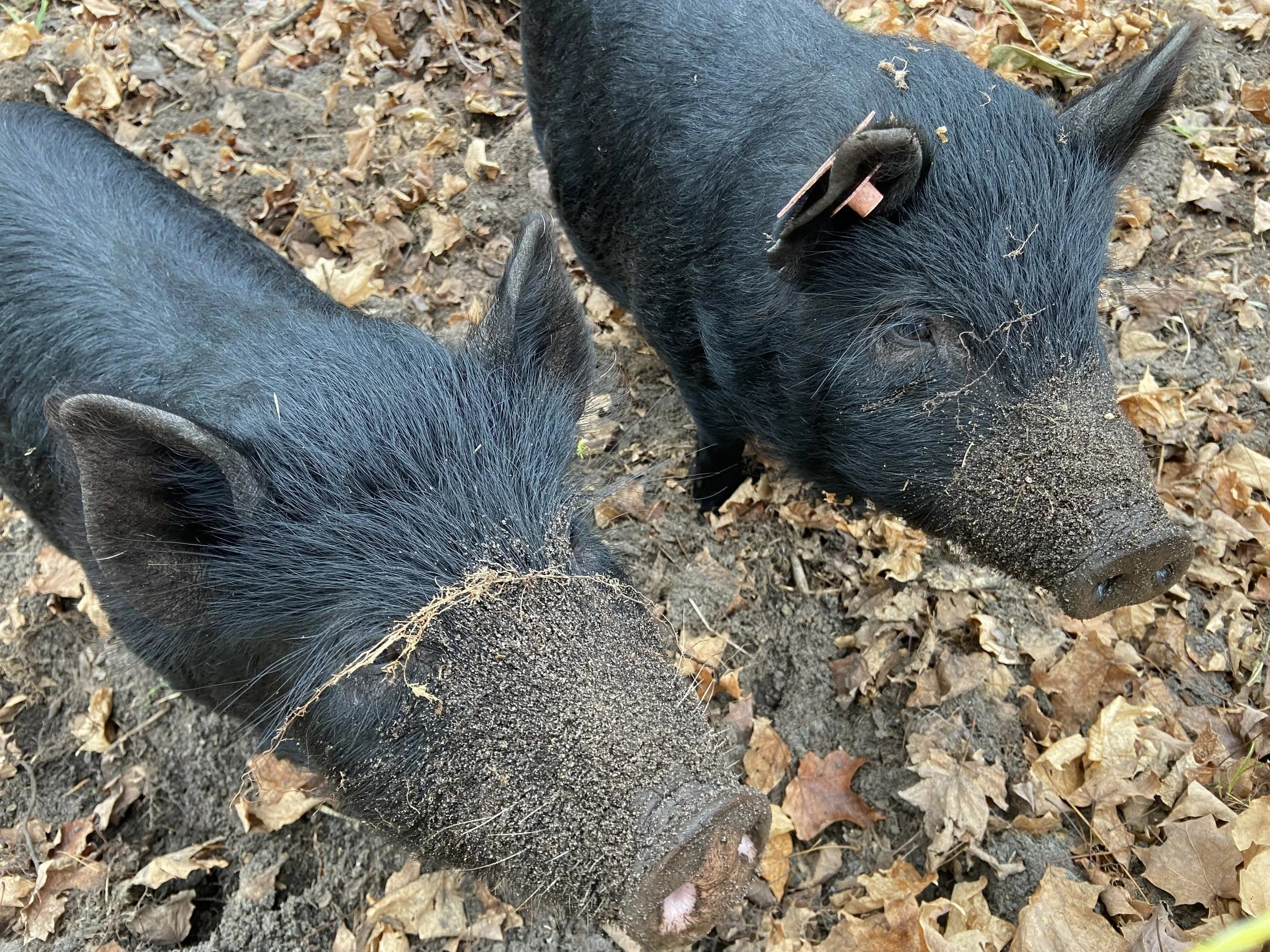
Trees provide shade in summer, shelter from winter winds, and natural materials that return to the land over time. Pigs harvest seasonal mast crops like acorns and beech nuts. Sheep, cattle, and goats browse woodland edges and understory vegetation.
Silvopasture is not simply turning livestock loose in the woods. It requires observation, rotation, rest, and protection for areas that need regeneration. We manage animal movement carefully so the woods remain healthy and productive.
A healthy woodland is not tidy. It depends on exposed soil, leaf litter, decaying wood, layered canopy, and habitat for wildlife. Our goal is to use each acre according to its strengths: supporting animal welfare, producing exceptional food, maintaining woodland health, and making room for wildlife on a working farm.
A healthy farm is more than pasture. It includes animals, trees, wildlife, forage, and the people who depend on them.
Why Heritage Breeds
We raise heritage breeds because they fit the way we farm: on pasture, in woodland, through real seasons, and within a system that asks animals to use their natural strengths.
Many modern commercial livestock breeds were developed for controlled systems built around fast weight gain and high-yield carcasses. Heritage breeds followed a different path. They were shaped on working farms, where animals had to forage, mother well, handle weather extremes, resist parasites, and remain productive over time.
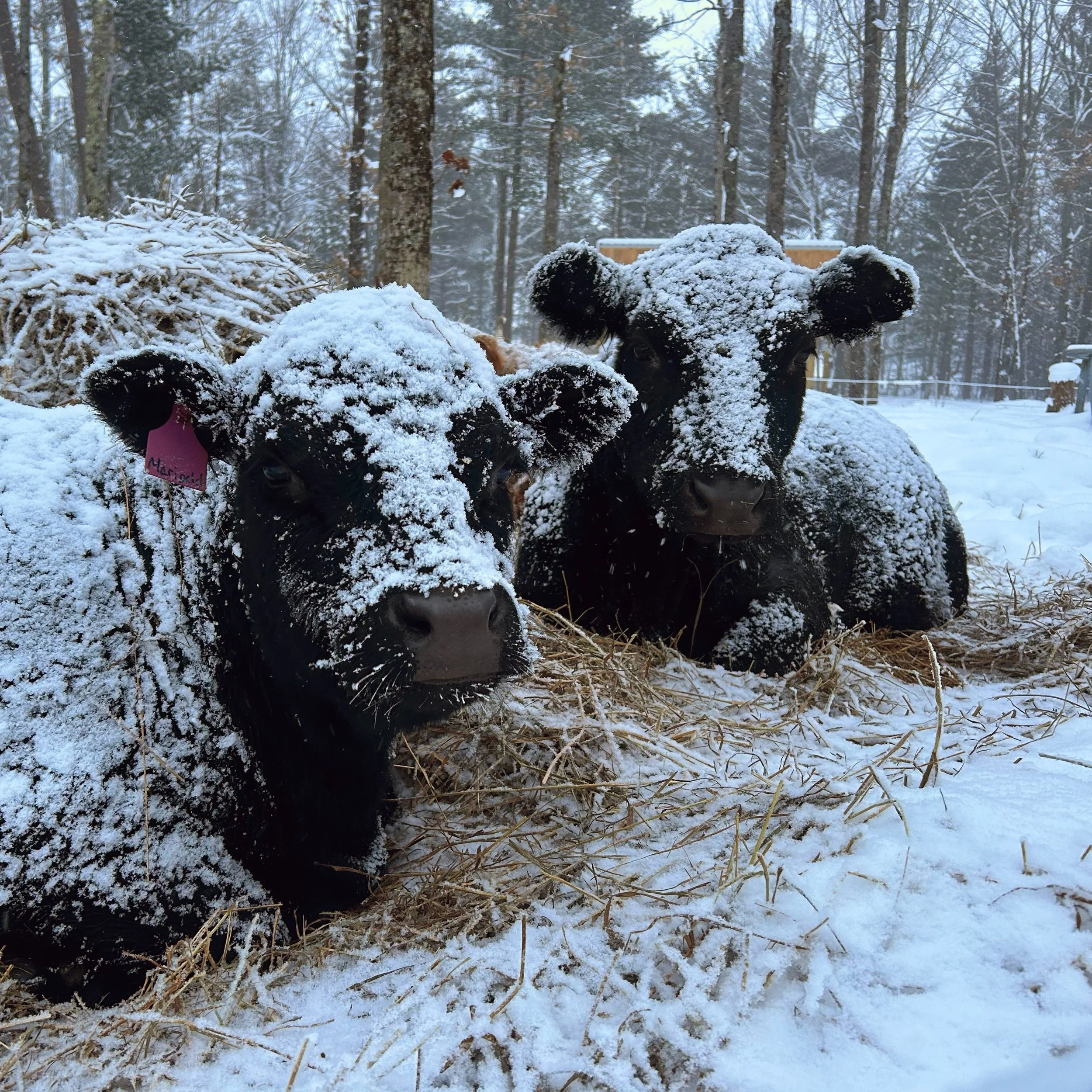
A pig should be able to root, forage, and explore. A sheep or goat should be able to graze, browse, climb, and move across varied terrain and woodland edges. A cow should be able to harvest forage across both open pasture and woodland. Rather than forcing animals into a rigid production model, we match our practices with their natural strengths.
Those choices support animal welfare, environmental stewardship, and food quality. Slower growth, extended time on pasture, natural diets, and generations of selection produce food with remarkable flavor, texture, and character.
Heritage breeds are not valuable to us because they are old-fashioned. They are valuable because, when raised well, they belong on a working farm and at the table.
Our customers are not purchasing a conservation project. They are purchasing dinner.
Frequently Asked Questions
-
“Livestock should be able to live as the animals they are.”
Our responsibility as farmers is not to maximize production at any cost. Our responsibility is to create environments that support animal health, encourage natural behaviors, and allow animals to thrive while under our care.
This philosophy begins at birth. We select breeds known for hardiness and strong maternal instincts, and we provide birth environments suited to the species, season, weather, and needs of the mother and young. We monitor closely and intervene only when necessary, with the goal of healthy mothers successfully raising healthy young.
Our animals are raised entirely outdoors with access to fresh air, sunlight, pasture, woodland, and open shelters for weather extremes. This gives them ongoing opportunities to graze, browse, root, forage, socialize, explore, and express the behaviors that make them successful.
We use rotational grazing to move animals regularly to fresh pasture and woodland. This provides clean forage, reduces parasite pressure, minimizes overgrazing, and encourages animals to use the landscape naturally.
From birth through daily movement across pasture and woodland, our welfare standard is built around the same principle: Animals do best when their health, instincts, and natural behaviors are supported rather than suppressed.
-
“Good nutrition is fundamental to animal welfare.”
Different species, breeds, life stages, and purposes have different nutritional requirements, and our feeding programs are designed accordingly. Across all species, breeding females receive additional nutritional support during late pregnancy and nursing, while young animals receive early-life support during periods of rapid growth.
Because we supplement young ruminant animals with grain, we do not make a USDA grass-fed claim for our retail meat program. We use the term “forage-fed” to describe diets based primarily on pasture, hay, and woodland browse. That does not mean every animal receives the same diet year-round. Feed varies by species, age, season, and purpose, especially for young animals and breeding females.
Cattle (Irish Dexter)
Primary Diet: Beef steers are forage-fed for most of their lives and entirely forage-fed after their first six months, which represents a tiny portion of their 30 to 36-month harvest age.
Breeding Female Support: Breeding females receive targeted nutritional support during late pregnancy and nursing.
Young Animal Support: Calves receive access to additional nutritional feed prior to weaning to support balanced development.
Sheep & Goats (Black Welsh Mountain & Dual-Purpose Goats)
Primary Diet: Sheep and goats are forage-fed throughout most of their lives via active pasture and silvopasture
Breeding Female Support: High-quality alfalfa hay and supplemental feed are provided during pregnancy and nursing.
Young Animal Support: Lambs and kids receive alfalfa hay and supplemental feed prior to weaning to support healthy early growth before transitioning fully to pasture.
Pigs (American Guinea Hogs)
Primary Diet: American Guinea Hogs obtain much of their diet through pasture, woodland forage, and rooting. They require remarkably little supplemental feed during the growing season, with additional feed provided during northern Michigan winters.
Breeding Female Support: Additional feed is provided during late pregnancy and nursing for sows.
Young Animal Support: Piglets are free-fed during their first months of life to support healthy, early growth.
Local Sourcing: We proudly purchase our non-GMO feed and hay from a deeply community-integrated farm family less than twenty minutes away who shares our commitment to transparent, local production.
Mineral Supplementation: While a diverse natural environment reduces the need for heavy supplementation, we provide targeted support when required. Because our region is naturally deficient in selenium, our animals receive vital selenium support.
We regularly evaluate forage and water quality to tailor our nutrition programs strictly by species. For some animals, like our Black Welsh Mountain sheep, feed is tailored specifically to the exact breed level.
-
“Animal welfare comes first, and our customers deserve clear, uncompromised transparency about how their food was raised.”
Our standard retail meat program uses no growth hormones and no antibiotics.
We use a minimal, targeted vaccination program focused only on vaccines that provide a clear welfare and health benefit. We do not believe in vaccinating simply because a product exists, nor do we believe in avoiding effective preventative care when significant risks are present.
Our retail meat vaccination protocols are species-specific:
Beef cattle receive limited early-life vaccination against serious respiratory, clostridial, tetanus, and other high-risk cattle diseases. These vaccines are concentrated in the first few months of life, when young animals are most vulnerable and preventive care offers the greatest welfare benefit.
Meat sheep and goats receive limited early-life vaccination against clostridial disease and tetanus, both of which are widely present in the environment and can kill otherwise healthy animals with little warning.
Pigs raised for meat receive no vaccines.
We keep our vaccination program narrow because our goal is not maximum intervention. It is appropriate protection. Some livestock diseases are too severe, fast-moving, or damaging to animal welfare to safely ignore, and we believe responsible farming means preventing avoidable suffering when effective tools exist.
If an animal raised for meat ever requires antibiotic treatment for an active illness, we treat that animal immediately to prevent suffering. That individual is then permanently identified in our records and removed from our standard retail meat program.
Note on breeding stock: Our breeding animals may receive additional targeted vaccinations based on local disease risk, veterinary guidance, and the long-term health of the farm. Our goal remains the same: appropriate protective care while minimizing unnecessary intervention.
-
“Processing is part of the responsibility, not an exception to it.”
A common farming saying is that an animal should have only one bad day. We believe that final day should be handled with the same care as every day before it: Calmly, patiently, and with as little fear, confusion, or distress as possible.
Whenever possible, our animals load themselves onto familiar trailers. We transport them to our Animal Welfare Approved processors no more than 24 hours before harvest, and often on the morning of processing.
Our promise to our animals includes calm loading, familiar handling whenever possible, short transport and holding times, and choosing processors whose standards align with our own.