
American Guinea HogS
-
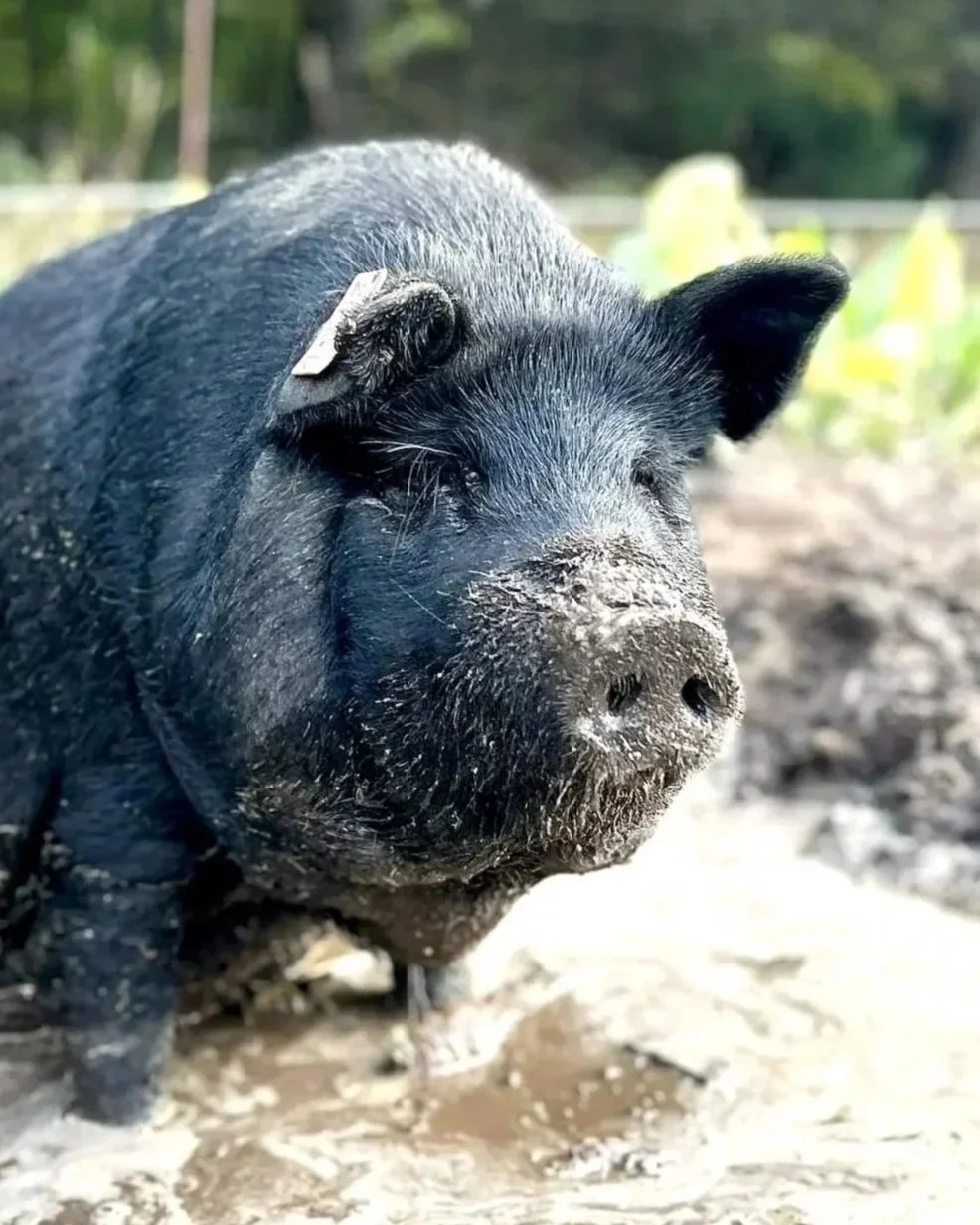
American Guinea Hogs are small-framed American heritage pigs with docile temperaments, strong foraging ability, and a historic role as homestead pork and lard animals. Historically raised as traditional small-farm and homestead pigs, they earned their place by working close to the household—grazing, rooting, clearing seasonal garden surplus, and providing both meat and lard for the kitchen.
At Wanderwood, these pigs fit the exact way we farm. They thrive in our rotational grazing systems, work well in both open pasture and dense woodlots, and produce deeply colored, highly marbled pork.
-
Premium Pork
American Guinea Hog pork is why this breed anchors our pig program—deep red, highly marbled, and remarkably tender, with quality that comes from slow growth, careful feeding, and the breed’s natural lard-type structure.
This is a clear departure from the pale, lean pork most people are used to from grocery-store meat cases. The natural marbling helps the pork stay moist and tender during cooking, while the smaller frame of the animal creates approachable cut sizes for everyday meals.
At Wanderwood, American Guinea Hog pork is generous, versatile, and genuinely exceptional.
A Note on Preparation
Because this pork is naturally tender and deeply marbled, it does not need complicated techniques. The goal in the kitchen is simple: preserve the marbling, keep the pork juicy, and let the cut do what it already does well.
A quick sear can work beautifully, but prolonged high heat can dry the pork and waste the marbling that makes it special. Low-and-slow cooking, roasting, and smoking are also excellent options, especially for larger cuts, fresh hams, shoulders, and pork belly.
The flavor and tenderness are already built into the animal. That gives you real flexibility: quick meals, slow meals, smoked cuts, roasts, sausages, bacon, belly, and more, without needing to overwork the pork in the kitchen.
Lard & Soap
As a lard-type breed, American Guinea Hogs produce valuable fat as part of the harvest. When managed carefully through diet and growth rate, that fat supports marbling in the pork and produces high-quality lard for traditional cooking, baking, and rendering.
At Wanderwood, this lard also serves as a foundational ingredient in our premium natural soap program. It allows us to use more of the animal well, turning a traditional farm product into something practical, beautiful, and value-added for your home.
-
Heritage & Stewardship
A true American heritage breed with a documented history dating back to the early 1800s, American Guinea Hogs were traditionally known by names like Pineywoods Guinea, Forest Hog, Acorn Eater, and Yard Pig—titles that reflect their practical role on historic small farms and homesteads.
As commercial pork production shifted toward larger, faster-growing commercial breeds, the compact Guinea Hog nearly vanished. Today, they are listed as a Threatened breed by The Livestock Conservancy. Our herd is registered, and raising American Guinea Hogs helps preserve a practical American hog with value in pasture, woodlot, kitchen, and value-added farm products.
Land Management
Our pigs are active participants in a hands-on rotational grazing system, moving through a planned sequence of pastures, paddocks, and woodlots to give the land plenty of time to recover.
In some paddocks, we plant annual forage mixes—including oats, forage turnips, and common buckwheat—for them to harvest. Guinea Hogs are remarkably willing grazers, readily eating the lush tops of grasses and forage when available. While they retain the natural swine instinct to root, our active rotational management keeps the soil healthy, allowing us to strategically use their controlled digging to help clear rough woodlots and prepare them for future silvopasture seedings. Because pigs will over-work woodland soils if left in one place too long, this is a highly active management system rather than a passive one.
Northern Michigan Hardiness
As a hairy, traditional lard pig, the American Guinea Hog is well suited to our cold, damp northern winters. They use shared body heat and bedding incredibly well, often building deep nests in the winter hay, burrowing in until only a snout is visible while the snow adds an extra layer of natural insulation.
We provide sturdy, portable huts that shield them from driving sleet and winter rain. Because these shelters are mobile, we can move them along with the herd, protecting the animals without confining them to a single, muddy winter lot.
The Slower Growth Curve
Guinea Hogs grow at a much slower pace than conventional breeds. We raise ours for 18 to 24 months, allowing them to reach their naturally compact, full adult maturity steadily on pasture, planted forages, winter hay, and seasonal mast such as acorns and beech nuts.
This slow pace is vital to the quality of the meat. Because they are a traditional lard-type pig, pushing them with too much grain causes them to convert feed into excess backfat too quickly. Forage remains the foundation of their diet year-round. In the winter, we balance their significant hay intake with local, non-GMO grain sourced from a nearby feed mill. It requires significantly more time and management than industrial pork production, but it is the only way to achieve the quality we demand.
-
We sell American Guinea Hogs when available, including breeding stock registered with the American Guinea Hog Association (AGHA) and feeder barrows.
Our herd includes several sows and boars, selected for lineage, health, conformation, and temperament. Each has different strengths. When piglets are available, we try to match buyers with animals that fit their goals, whether they are looking for breeding stock, feeder animals, or homestead pigs.