
Arapawa Goats
-
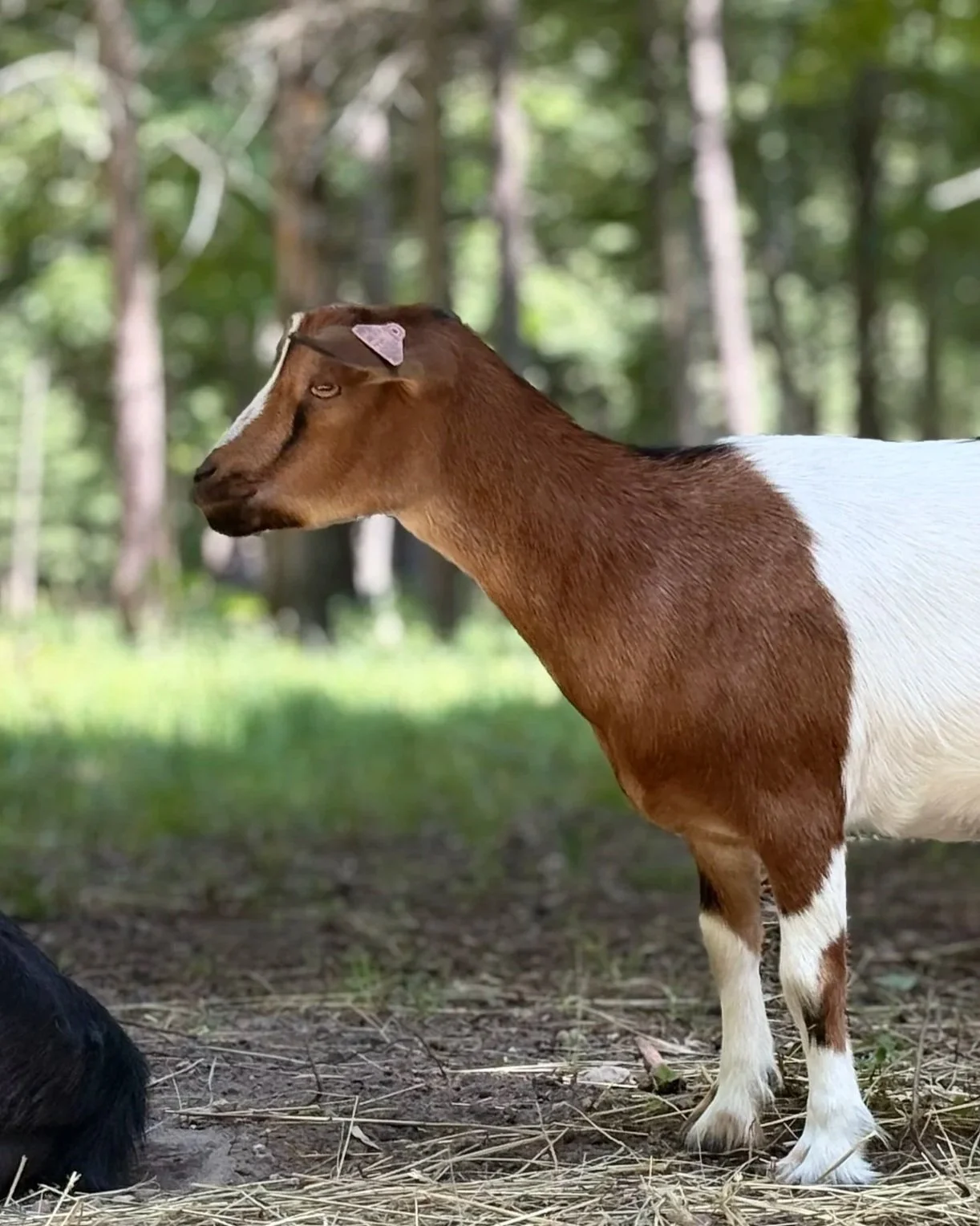
Our goat program is centered on Arapawa goats, a critically rare heritage breed whose history, hardiness, and practical usefulness make them especially well suited to our farm. They offer excellent meat potential, useful milk from select does, environmental resilience, and the opportunity to help sustain a breed with very few animals left in the world.
The Arapawa starter herd consists of four females and two bucks. With two sires and several low-inbreeding breeding options across the females, this small foundation gives us room to retain offspring and build a larger herd over the next several years.
In the short term, our Arapawa bucks will cross with Kiko does to help meet existing demand for goat meat while purebred offspring are retained for herd expansion. As the Arapawa herd reaches production scale, the Kikos will be phased out.
-
Premium Goat Meat
Goat meat is one of the most underrated meats we produce, and demand is already strong. On many market days, we sell more ground goat than ground beef.
Arapawas have a recognized role as meat animals, but their specific culinary qualities remain relatively undocumented. There is little published guidance on flavor, tenderness, ideal finishing age, or how the breed performs across individual cuts.
As we begin producing pure Arapawa meat, we will put it in experienced culinary hands and use that feedback to refine feeding, finishing age, cut selection, and preparation recommendations.
Our initial plan is to raise Arapawa meat animals to approximately 12–15 months and offer classic heritage cuts rather than reducing the carcass to a few familiar products. The result should be especially rewarding for professional and aspiring cooks who enjoy learning an animal through its different cuts and cooking methods.
A Note on Preparation
We favor traditional, bone-in cuts that preserve more of the animal: whole legs and shoulders, full racks, whole necks, and shanks. Tender cuts such as the rack and loin chops are well suited to dry-heat cooking, while the neck, shoulder, and shanks reward slower roasting or braising.
We also offer specialty cuts, including cured, smoked breast meat. Goat rewards cooks who are willing to work with the whole animal and match the cooking method to the cut.
Milk & Soap
Select Arapawa does will also be milked for farmstead use and goat-milk soap.
We are not developing a conventional dairy herd. Instead, milk will remain a secondary product of the breeding herd, allowing productive does to contribute beyond raising kids while supplying the modest amount of dairy our farmstead uses.
-
Heritage & Stewardship
Arapawa goats take their name from Arapawa Island in New Zealand’s Marlborough Sounds, where they were first recorded in 1839. Generations of isolation shaped a population that genetic testing has since shown to be distinct from other goat breeds.
That population nearly disappeared. In 1987, Betty and Walt Rowe established a sanctuary with just 40 goats returned to domestication. The entire U.S. population later grew from only six imported founders.
Today, only a few hundred Arapawas remain in the United States, and the breed remains a critical conservation priority.
We are especially excited to partner with Conner Prairie in Indiana to establish our starter herd. Its longstanding breeding program has played an important role in expanding the breed beyond its own farm by placing Arapawas with conservation-minded breeders across the country.
Land Management
Arapawas are effective browsers and are particularly useful for clearing brush and weeds. That makes them well suited to our woodland pastures, brushy edges, and other mixed areas where grazing alone leaves vegetation behind.
Within our rotational system, they add a different kind of pressure to the landscape than sheep or cattle, helping keep those areas open and productive.
Northern Michigan Hardiness
Cold, damp winters make Northern Michigan a challenging environment for goats, particularly breeds developed for warmer or drier climates.
Arapawas are unusually hardy and adaptable, with a long history of surviving in cool, exposed conditions. That makes them especially well matched to our climate and one of the heritage meat breeds best suited to the kind of environment we farm in.
They are still goats. Even hardy animals need access to dry shelter and protection from the harshest winter weather.
The Slower Growth Curve
Our goat program is not designed around getting animals to market at the youngest possible age. Arapawas align with that model; their breed standard considers them mature at two years of age.
We plan to process at 12–15 months, allowing the animals time to develop without pushing for maximum rate of gain. As we gain experience with the breed, we will refine that finishing window based on carcass development and eating quality.
-
As we transition away from our original dairy herd, we have registered Nigerian Dwarf breeding animals available for sale. Registration is through the American Dairy Goat Association (ADGA).
Registered Kiko breeding animals may also become available as we phase out the Kiko herd. Registration is through the National Kiko Registry (NKR).
Our current priority with the Arapawas is herd expansion, so breeding-stock availability will initially be limited. Registration is through the Arapawa Goat Breeders Association (AGBA).
AVAILABLE GOATS
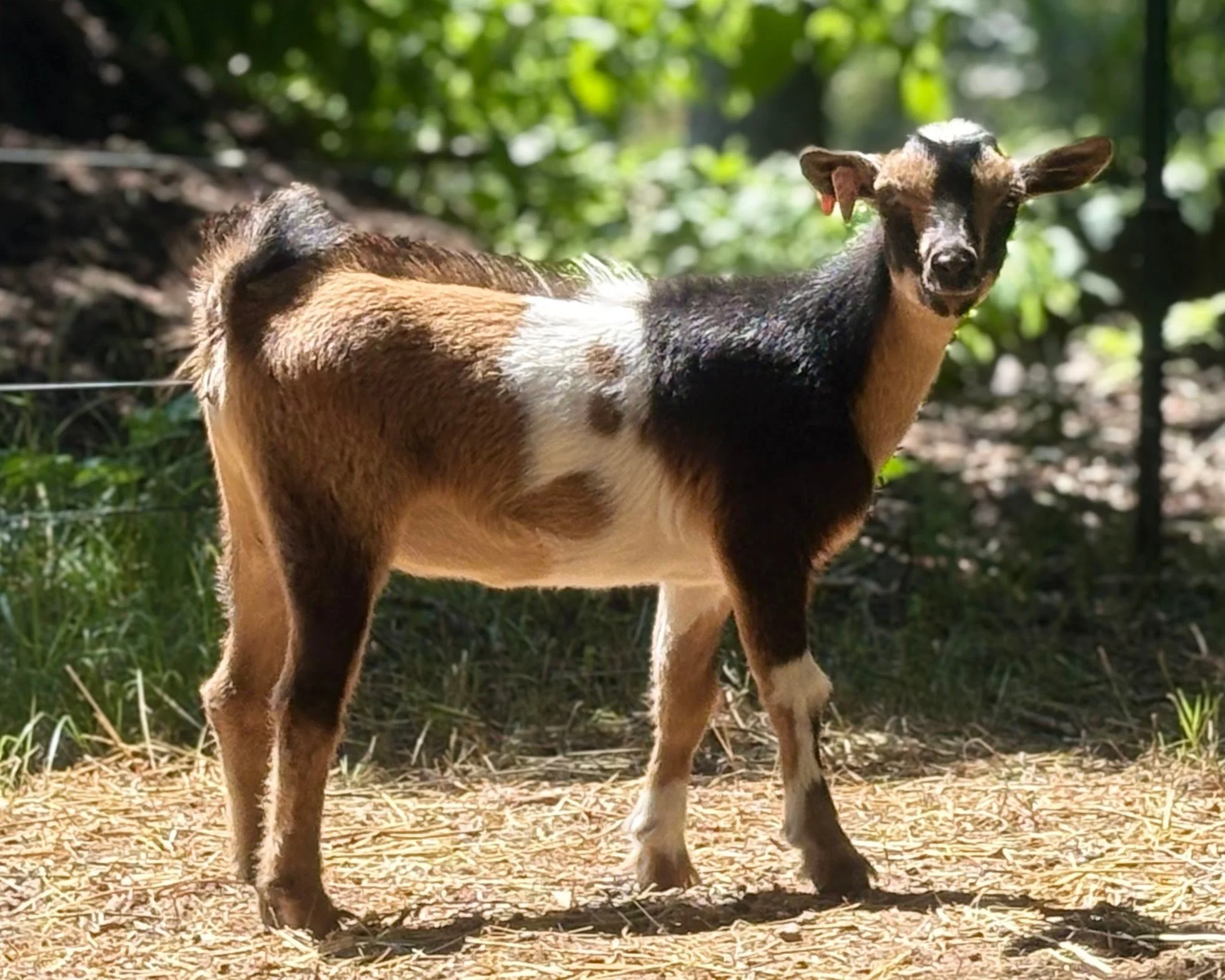
Willow
Nigerian Dwarf Doeling • Born May 2026
ADGA-registered and polled, Willow comes from strong milking lines and is sired by a Superior Genetics buck. Adventurous and people-friendly, she is a promising future breeding doe or family milker.
$750
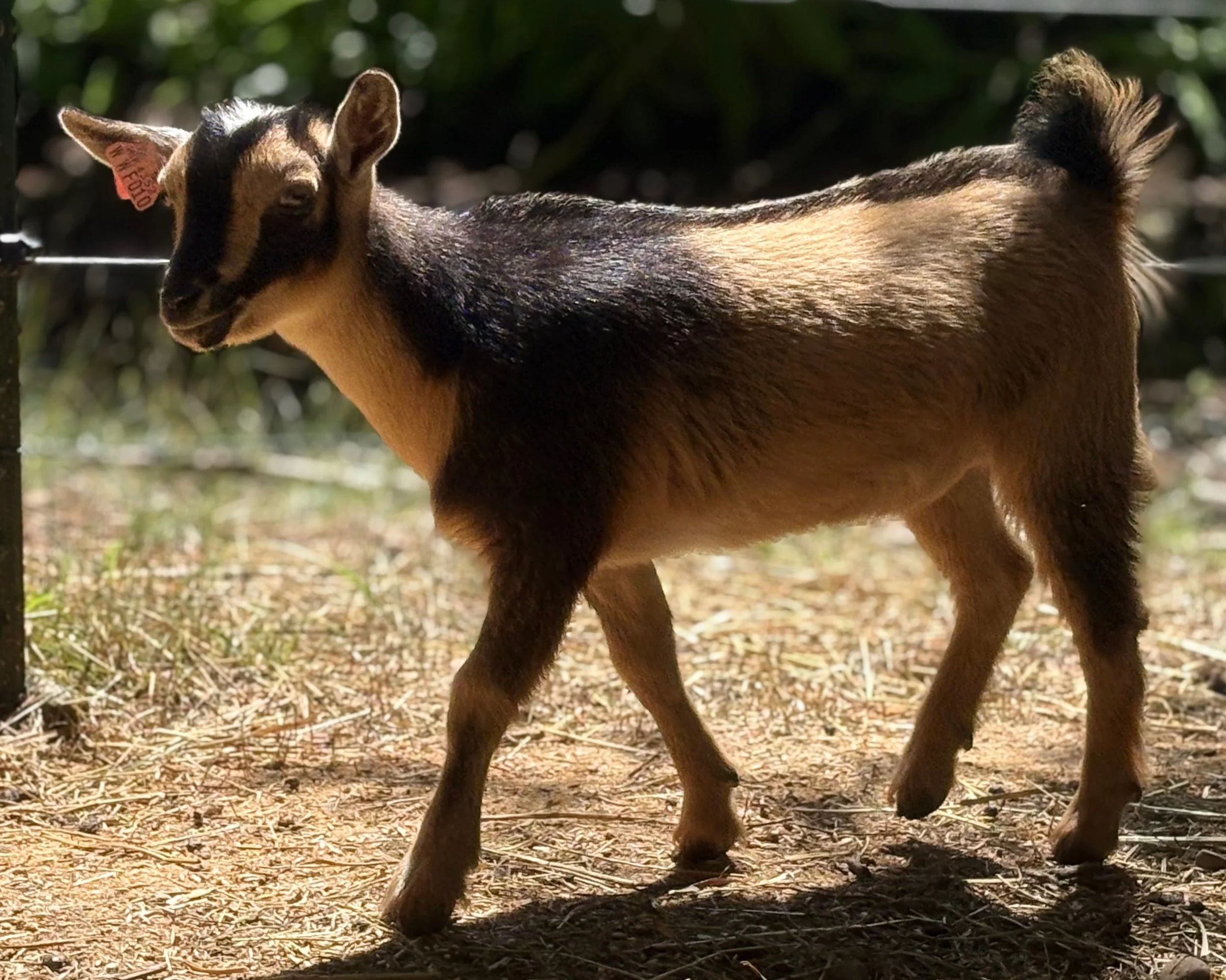
Pixie
Nigerian Dwarf Doeling • Born May 2026
ADGA-registered and polled, Pixie comes from strong milking lines and is sired by a Superior Genetics buck. Bold, curious, and confident, she offers strong dairy potential in a very compact package.
$750
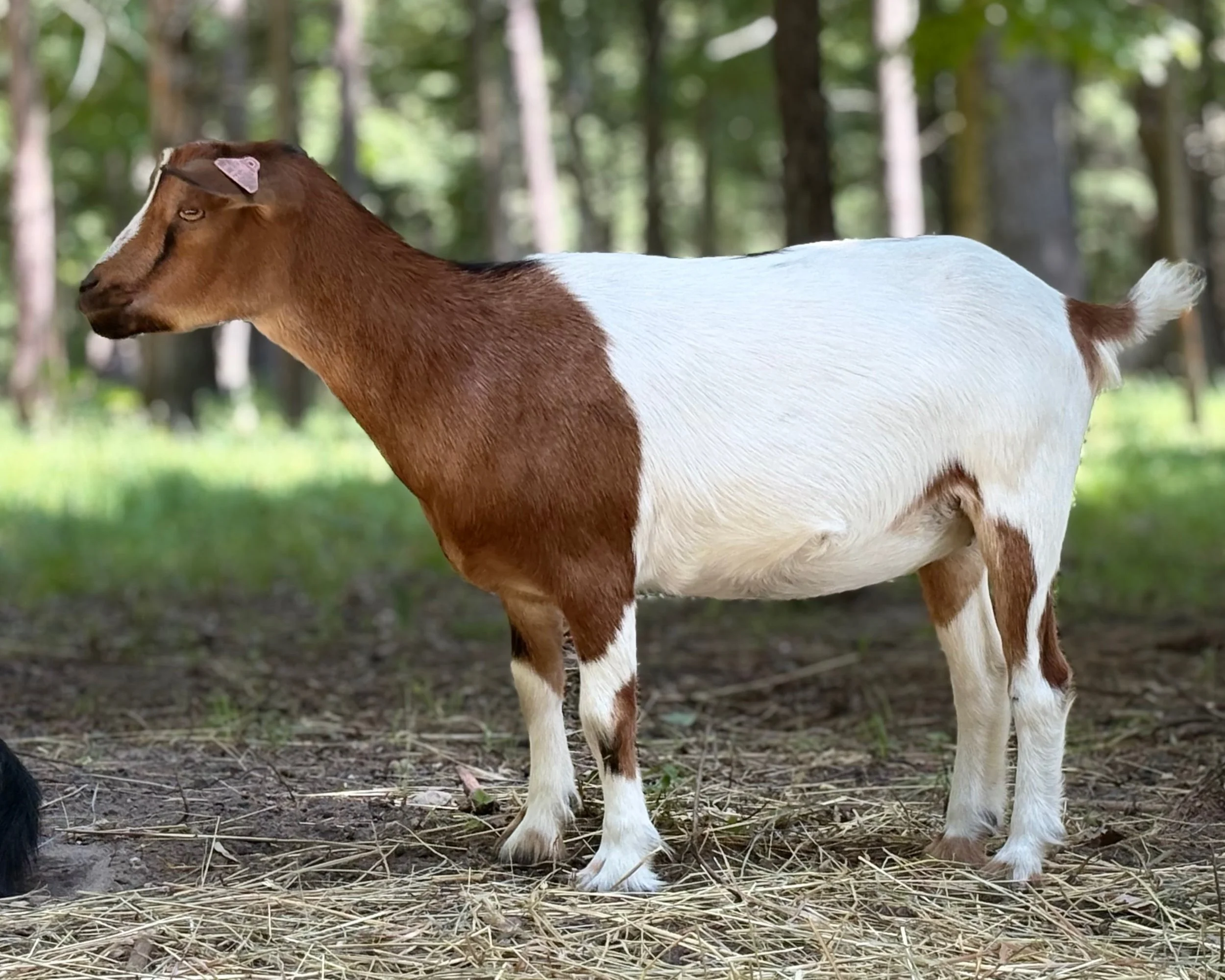
Chloé
Nigerian Dwarf Doeling • Born May 2025
ADGA-registered, polled, and ready to breed in 2026, Chloé is a well-grown young doe from one of our strongest milkers and a Superior Genetics sire. She offers excellent dairy lineage and promising potential as both a breeding doe and family milker.
$900
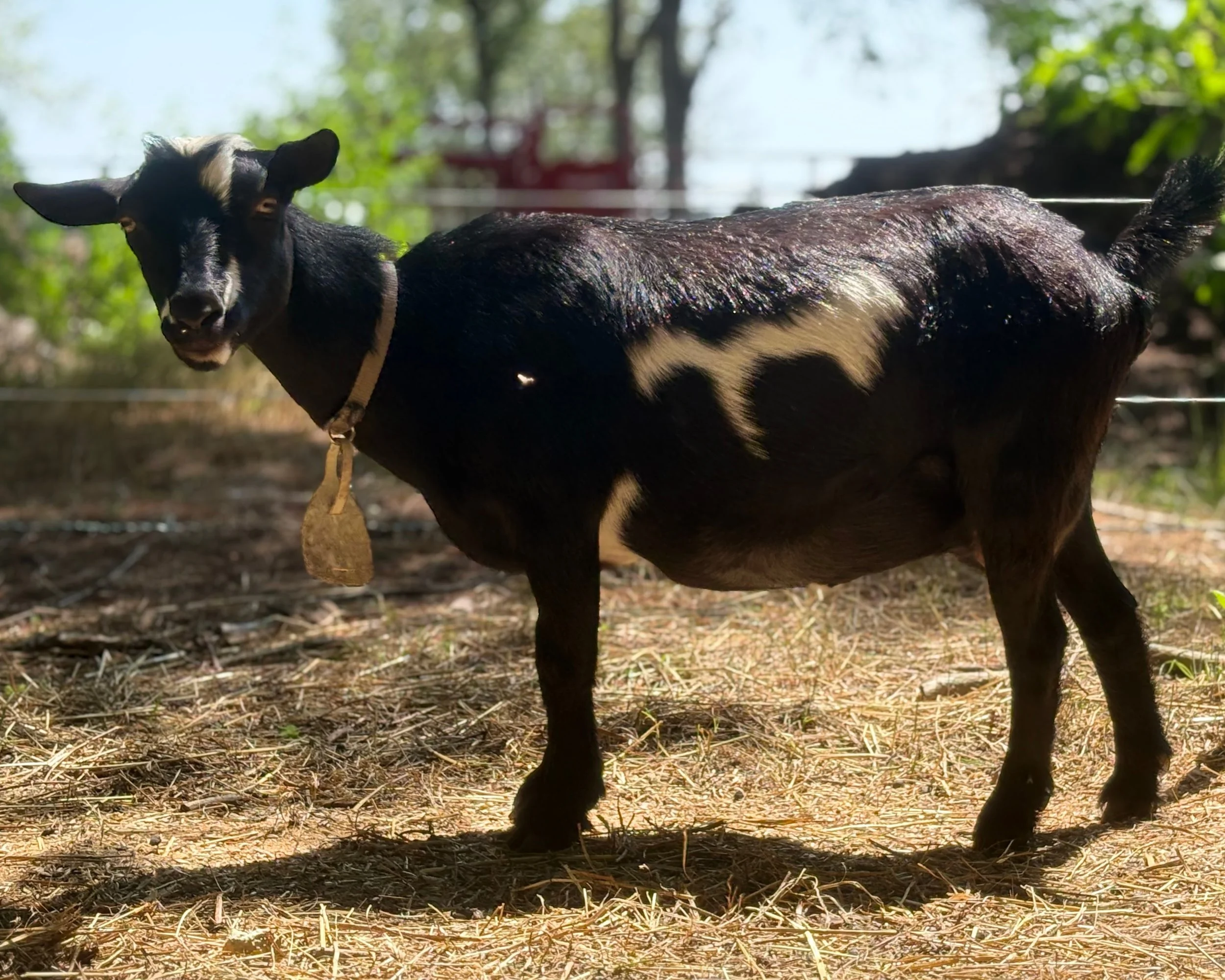
Lily
Nigerian Dwarf Doe • Born April 2024
ADGA-registered and disbudded, Lily is a proven young doe whose first kidding produced quads in spring 2026. An exceptional mother, she successfully adopted two abandoned kids and is ready to breed again this fall.
$1200
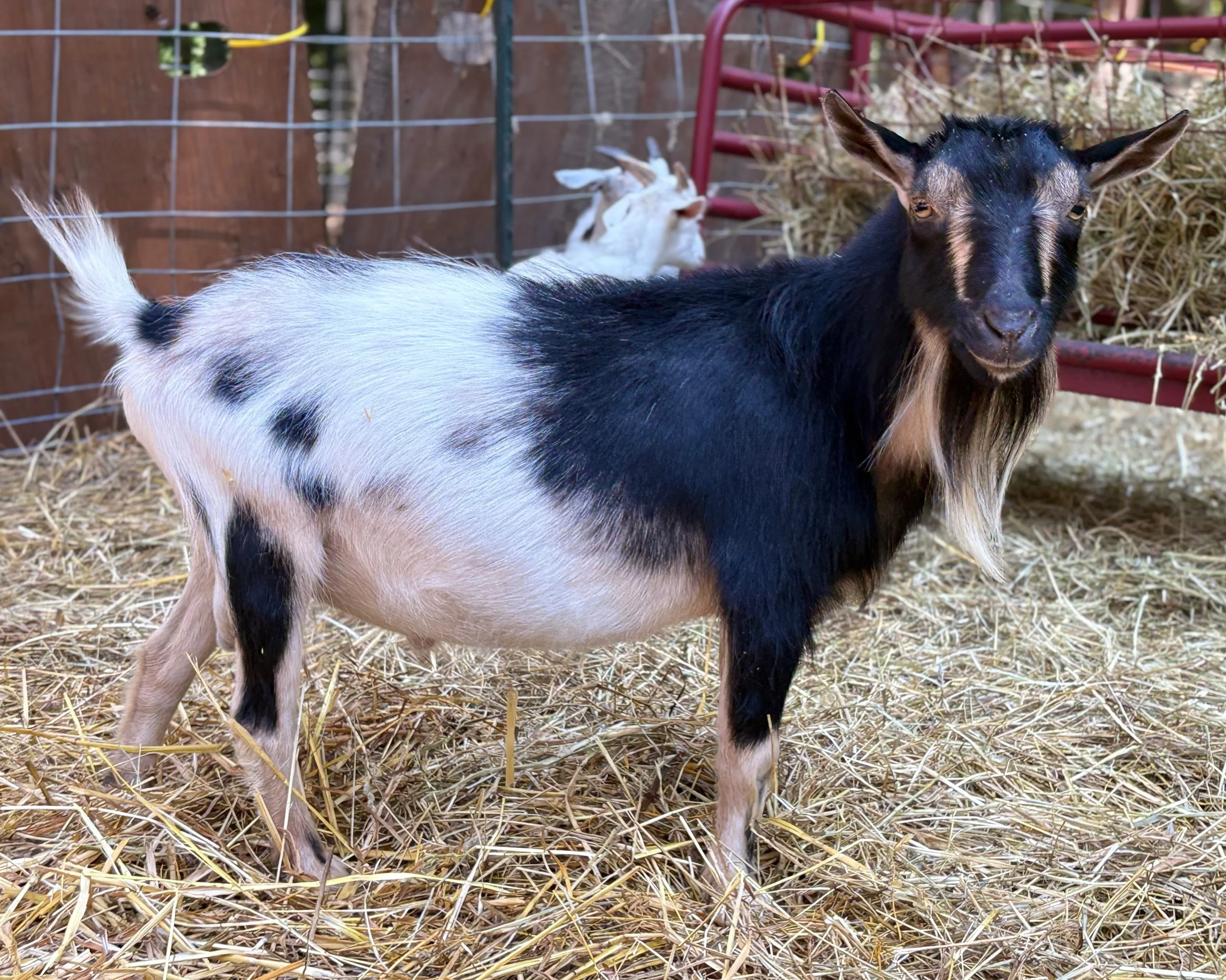
Redwood
Nigerian Dwarf Buck • Born March 2023
Redwood is an ADGA-registered, polled buck with the Superior Genetics designation. Exceptionally reliable and efficient, he has consistently settled every doe and doeling on the first cycle. Friendly and easy to handle, he actively seeks attention and is always pleased to accept head scratches.