
Black Welsh Mountain Sheep
-
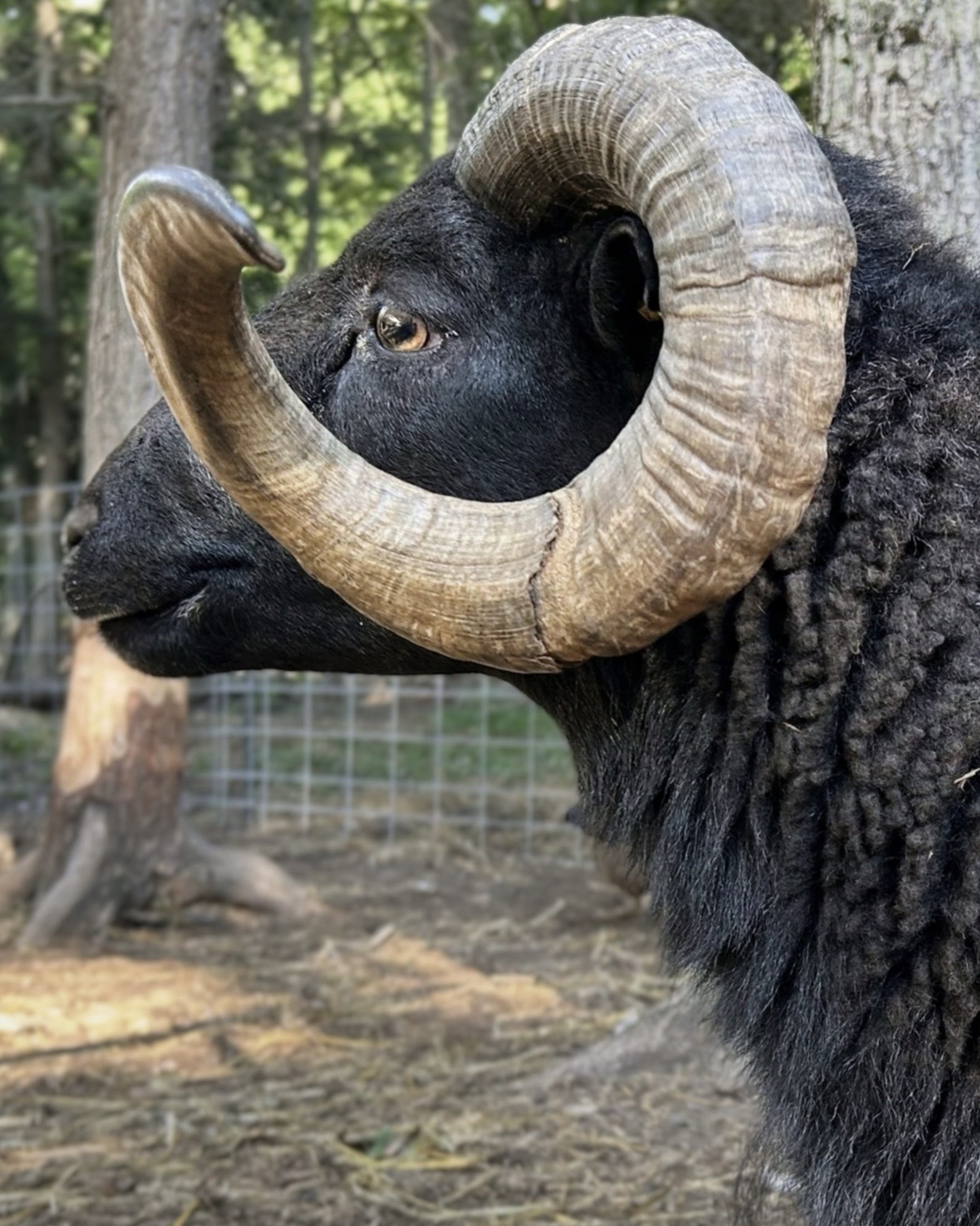
Black Welsh Mountain Sheep are compact, hardy Welsh sheep valued for mild, sweet meat and naturally black wool. At Wanderwood, we raise them first and foremost as a meat breed, choosing them for their ability to produce clean, mild, pasture-finished sheep meat at a slower, forage-based pace.
While their black fleece, hardiness, and mothering ability make them a practical fit for our Northern Michigan climate, those traits support the larger purpose of the breed here: high-quality sheep meat from rare heritage animals raised slowly and naturally on our pastures.
-
Premium Lamb
Black Welsh Mountain sheep produce mild, sweet meat with more depth than standard young lamb. Because the breed retains a clean flavor as it matures, it allows us to raise animals slowly on pasture without producing the gamey taste many people associate with older sheep.
For us, that is the core value of the breed: a slower-growing, pasture-finished animal that fits our ecological goals while producing meat that is flavorful, tender, and straightforward to cook. It gives us the best part of lamb and hogget together: more substance, more sweetness, and no need to hide the flavor.
A Note on Preparation
Because pasture-finished heritage meat is naturally lean and dense, it should be prepared according to the cut.
Tender cuts, like chops, racks, and loin roasts, are best suited to quick, dry-heat methods. They can be grilled, seared, or roasted simply with salt and heat, without heavy seasonings or complicated marinades. Working cuts, like shoulders, shanks, neck, and stew meat, need time. These cuts do well with low-and-slow methods like braising or slow roasting, which allow connective tissue to break down and the meat to become tender.
Black Wool
The sheep’s distinctive black wool is a valuable secondary harvest for our farm. Because the rich, dark color is natural, the fleece is prized by hand-spinners and artisans for undyed garments and traditional tweeds.
At Wanderwood, we use lower-grade wool on the land, placing it around young saplings and orchard trees as a natural mulch to help retain moisture and slowly compost nutrients back into our sandy northern soils.
-
Heritage & Stewardship
The Black Welsh Mountain breed developed in the rugged highlands of Wales from naturally occurring black sheep within traditional Welsh flocks. Once separated and bred true by shepherds a century ago, they became valued for their self-sufficiency, dense dark fleeces, and ability to thrive on marginal mountain grazing.
Today, Black Welsh Mountain Sheep are listed as a Threatened breed by The Livestock Conservancy. Our flock is fully registered, and raising them supports the conservation of a rare Welsh breed with value as both a meat animal and a source of naturally black wool.
Land Management
These sheep are compact, efficient foragers that fit well into a managed rotational system across pasture and woodlot. Our flock spends much of its time in wooded areas, where their moderate size, sure-footedness, and strong foraging instincts allow them to use brush, understory growth, woodland edges, and seasonal forage well.
Their maternal instincts, ease of lambing, and manageable size make them practical sheep for a hands-on system. We time births for late winter and early spring so the lambs are ready to grow through the main forage season, converting pasture, browse, and woodlot forage into quality meat.
Northern Michigan Hardiness
Built for harsh, exposed environments, Black Welsh Mountain sheep tolerate cold, damp, and windy conditions well. Their short, thick, dense black wool provides natural winter protection, while simple shelter gives them a place to get out of wind, freezing rain, sleet, and driving snow.
In late spring, we shear the flock so they can move into the warmer months comfortably, while the woodland canopy provides shade through the heat of summer.
The Slower Growth Curve
These animals are not built for rushed, high-input commodity production. As small heritage sheep, they follow a natural, forage-based growth curve. We process our animals between 15 and 18 months, giving them extended time on pasture to mature.
This deliberate timeline places our meat into the traditional category of "hogget"—an animal aged between one and two years. While standard sheep can become gamey as they mature, the Black Welsh breed is known for retaining its mild sweetness at older ages. This allows us to raise them slowly and sustainably on pasture without sacrificing flavor or quality.
-
We offer registered Black Welsh Mountain Sheep ewe lambs when available. Ram lambs may be considered for sale selectively. Registration is through the American Black Welsh Mountain Sheep Association (ABWMSA).
Our flock is managed as a dual-purpose heritage breed, but we prioritize stock suited for meat production, pasture performance, health, and soundness. Most lambs are retained or grown out for meat, so breeding-stock availability is limited.